Sabtu, 15 Agustus 2009

Indonesian Cuisine

Indonesian cuisine reflects the vast variety of people that live on the 6,000 populated islands that make up Indonesia. There is probably not a single "Indonesian" cuisine, but rather, a diversity of regional cuisines influenced by local Indonesian culture and foreign influences.

Throughout its history, Indonesia has been involved in trade due to its location and natural resources. Indonesia’s indigenous techniques and ingredients, at least in the Malay World parts, are influenced by India, the Middle East, China and finally Europe. Spanish and Portuguese traders brought New World produce even before the Dutch came to colonize most of Indonesia.

The Indonesian island of Maluku, which is famed as "the Spice Island," also contributed to the introduction of native spices to Indonesian and global cuisine. The cuisine of Eastern Indonesia is similar to Polynesian and Melanesian cuisine.Sumatran cuisine, for example, often shows its Middle Eastern and Indian influence, featuring curried meat and vegetables, while Javanese cuisine is rather more indigenously developed. Elements of Indonesian Chinese cuisine can be seen in Indonesian cuisine: items such as bakmi (noodles), bakso (meat balls) and lumpia have been completely assimilated.


The most popular dishes that originated in Indonesia are now common across most of Asia. Popular Indonesian dishes such as satay, beef rendang, and sambals are also favored in Malaysia and Singapore. Soy-based dishes, such as variations of tofu (tahu) and tempe, are also very popular.

Tempe is regarded as a Javanese invention, a local adaptation of soy-based food fermentation and production. Indonesian meals are commonly eaten with the combination of a spoon in the right hand and fork in the left hand, although in many parts of the country (such as West Java and West Sumatra) it is also common to eat with one's hands.

In restaurants or households that commonly use bare hands to eat, like in traditional Sundanese or Minangkabau restaurants, they usually serve kobokan, a bowl of tap water with a slice of lime in it to give a fresh scent. This bowl of water with lime in it should not to be consumed; it's used to wash one's hand before and after eating with bare hand.

Rice

Rice is a staple for all classes in contemporary Indonesia, and it holds a central part in Indonesian culture: it shapes the landscape; is sold at markets; and is served in most meals as a savoury and sweet food.

Rice is most often eaten as plain rice (nasi putih) with just a few protein and vegetable dishes as side dishes. It is also served, however, as ketupat (rice steamed in woven packets of coconut fronds), lontong (rice steamed in banana leaves), intip (rice crackers), desserts, vermicelli, noodles, brem (rice wine), and nasi goreng (fried rice).Rice was only incorporated into diets, however, as either the technology to grow it or the ability to buy it from elsewhere was gained.


Evidence of wild rice on the island of Sulawesi dates from 3000 BCE. Evidence for the earliest cultivation, however, comes from eighth century stone inscriptions from the central island of Java, which show kings levied taxes in rice. Divisions of labour between men, women, and animals that are still in place in Indonesian rice cultivation, can be seen carved into the ninth-century Prambanan temples in Central Java: a Water buffalo attached to a plough; women planting seedlings and pounding grain; and a man carries sheaves of rice on each end of a pole across his shoulders.


In the sixteenth century, Europeans visiting the Indonesian islands saw rice as a new prestige food served to the aristocracy during ceremonies and feasts.Rice production requires exposure to the sun. Rice production in Indonesian history is linked to the development of iron tools and the domestication of Wild Asian Water Buffalo as water buffalo for cultivation of fields and manure for fertilizer. 

Once covered in dense forest, much of the Indonesian landscape has been gradually cleared for permanent fields and settlements as rice cultivation developed over the last fifteen hundred years.Other staple foods in Indonesia include maize (in drier regions such as Madura and the Lesser Sunda Islands), sago (in Eastern Indonesia), cassava (dried cassava, locally known as 'tiwul' is an alternate staple food in arid areas in Java such as Gunung Kidul and Wonogiri) and root tubers (especially in hard times).

Peanut Sauce

One of the main characteristic of Indonesian cuisine is the wide applications of bumbu kacang (peanut sauce) in many of Indonesian signature dishes such as satay, gado-gado, karedok, ketoprak, pecel. It usually applied upon the main ingredients (meat or vegetable) to give the taste, or might simply as dipping sauce such as sambal kacang (a mixture of grinded chilli and fried peanuts) for otak-otak or ketan. Introduced from Mexico by Portuguese and Spanish merchants back in 16th century, peanuts took place within Indonesian cuisine as the popular sauce. Indonesian peanut sauce represents a sophisticated, earthy thing rather than a sweet, gloppy sauce.

The peanut thrived in the tropical environment of Southeast Asia, and today, they can be found roasted and chopped finely, topping a variety of dishes and in marinades and dipping sauces. Peanut sauce reach its sophistication in Indonesia, with the delicate balance of taste acquired from various ingredients according to each recipe of peanut sauce; fried peanuts, gula jawa (coconut sugar), garlic, shallot, ginger, tamarind, lemon juice, lemongrass, salt, chilli, pepper, sweet soy sauce, grinded together and mixed with water to acquire right texture.

The secret to good peanut sauce is “not too thick and not too watery.” Indonesian peanut sauce tends to be less sweet than the Thai one (which is a hybrid adaptation). Gado-gado is eaten with peanut sauce throughout Indonesia showcasing the delicate balance of sweet, spicy and sour.

Coconut Milk

Given the location of Indonesia as a tropical country with abundant tropical produce such as coconut, Indonesia, since ancient times. has developed various uses of this plant. Another main characteristic of Indonesian cuisine is the wide applications of santan (coconut milk) in many of Indonesian dishes like rendang, soto, sayur lodeh, opor ayam, to desserts such as es cendol, and es doger. Coconut milk's use does not exclusively belongs to Indonesian cuisine, since it also can be found in Indian, Samoa, Thailand, Malaysian, Philippines, to Brazilian cuisine. However the use of coconut milk is quite extensive in Indonesia.

The extensive uses of coconut milk especially found in Minangkabau cuisine, while in Minahasan (North Sulawesi) cuisine, coconut milk rather absent except for Minahasan cakes and desserts such as klappertart. In Indonesian cuisine, coconut milk can be found in two type, thin coconut milk and thick coconut milk, the difference is depends on the amount of water in it. Thin coconut milk usually being use for soups such as sayur lodeh and soto, while creamy thick one use for rendang and desserts. It can be acquired freshly from shredded coconut flesh in traditional market, to processed coconut milk in carton packages at supermarket.

After the juice (milk) being extracted from shredded coconut flesh to acquire coconut milk, the ampas kelapa (leftover coconut flesh) still can be used as urap, seasoned and spiced shredded coconut flesh mixed together with vegetables.

Urap is quite similar to gado-gado except the peanut sauce is replaced by shredded coconut one. This leftoever of shredded coconut flesh also can be cooked, sauted and seasoned to make serundeng, the almost powder-like sweet and spicy coconut granules. Serundeng can be mixed with meat such as serundeng daging (beef serundeng) or sprinkled on top of other dishes such as soto or ketan (sticky rice). An example on heavy use of coconut is Buras from Makassar, rice wrapped in banana leaf cooked with coconut milk and sprinkled with coconut powder similar to serundeng.

Meal Times

In western and central Indonesia, the main meal is usually cooked in the late morning, and consumed around midday. In many families there is no set meal time where all members are expected to attend. For this reason, most of the dishes are made such that they can last and remain edible even if left on the table at room temperature for many hours.

The same dishes are then re-heated for the final meal in the evening. Most meals are built around a cone-shaped pile of long-grain, highly polished rice. A meal may include a soup, salad (or more commonly sauteed vegetables with garlic), and another main dish. Whatever the meal, it is accompanied by at least one, and often several relishes that are called sambals.

In eastern Indonesia, where the natives are more influenced by Pacific islander cultures such as on the island of Papua and Timor, the meals can be centered around other sources of carbohydrates such as sago and/or grain.

Feasts: Tumpeng and Rijsttafel

Many of Indonesian traditional customs and ceremony incorporated food and feast. One of the best example of Indonesian feast is tumpeng. Originated from Java, tumpeng is a cone shaped rice surrounded by assorted of Indonesian dishes. Traditionally featured in selamatan ceremony, the cone shape of rice is made by using cone-shaped weaved bamboo container. The rice itself could be plain steam rice, uduk rice (cooked with coconut milk), or yellow rice (rice colored with kunyit or turmeric).

The rice surrounded by assorted of Indonesian dishes, such as urap vegetables, fried chicken, semur (beef in sweet soy sauce), teri kacang (anchovy with peanuts), fried prawn, telur pindang (boiled marble egg), shredded omelette, tempe orek (sweet and dry fried tempeh), perkedel kentang (mashed potato fritters), perkedel jagung (corn fritters),sambal goreng ati (liver in chilli sauce), and many other things.
Tumpeng, the cone shaped rice surrounded by assorted Indonesian dishes.Tumpeng dated back to ancient Indonesian tradition that revered mountains as the abode of ancestors and gods. The cone-shaped rice meant to mimics the holy mountain. The feast served as some kind of thanksgiving for the abundance of harvest or any other blessings. Because of its festivities and celebrative value, up until now tumpeng sometimes used as Indonesian counterpart of birthday cake.Another Indonesian feast, the Rijstafel (Indonesian rice table), is demonstrating colonial opulance and Indonesian cuisine diversity at the same time.

The classic style rijstafel ceremony involved the serving of up to 40 different dishes, by 40 male waiters, bare-footed but dressed in formal white uniforms with blangkon (traditional Javanese caps) on their heads and batik cloth around their waists. The contemporary Indonesian feast adopted western style buffet. It usually can be found in wedding ceremony or any other festivities. Its employed long table with dishes served on it.

The layout of Indonesian wedding ceremony buffet usually employs: the plates, eating utensils (spoon and fork), and paper napkins is placed on one end, followed by rice (plain or fried rice), series of Indonesian (sometimes International) foods, sambal and krupuk (crackers), ended with glass of water on the other end of the table.

Snacks and street food

In most cities it is common to see Chinese dishes such as bakpao (buns), bakmie (noodles), and bakso (meatballs) sold by street vendors and restaurants alike, often adapted to become Indonesian Chinese cuisine. One common adaptation is that pork is no longer used since the majority of Indonesians are Muslims. Another popular Indonesian street food and snack is siomay and batagor, pempek, bubur ayam (chicken congee), bubur kacang hijau (green beans porridge), satay, nasi and mie goreng (fried rice and fried noodle), toge goreng, laksa, and gorengan (Indonesian assorted fritters).

Indonesian street snack also included ice and sweet beverages, such as es cendol or es dawet, es teler, es cincau, es doger, es campur, es potong, and es puter. Indonesian cakes and cookies often called as jajan pasar (market goodies). Indonesia has a rich collection of snack called kue (cakes and pastry) either savoury or sweet. The popular one such as risoles, pastel, lumpia, lemper, lontong, tahu isi, lapis legit, getuk, bakpia, bika ambon, lupis, lemang, kue pisang, klepon, onde-onde, nagasari, soes, bolu kukus, and many other things.

Street and street-side vendors are common, in addition to hawkers peddling their goods on bicycles or carts. These carts are known as pedagang kaki lima - (named after the 5-foot (1.5 m) wide footpaths in Indonesia, however some people say they are named 'five feet' after the three feet of the cart and two feet of the vendor!), and many of these have their own distinctive call or songs to announce their wares. For example, the bakso seller will hit the side of a soup bowl, whereas mie ayam is announced by hitting a wood block.

Fruit

Indonesian markets abound with many types of tropical fruit. These are an important part of the Indonesian diet, either eaten freshly, made into desserts (such as es buah), made into savoury and spicy dishes like rujak, fried like pisang goreng (fried banana), or processed into kripik (crispy chips) as snacks like jackfruit or banana chips.

Many of these fruits such as Mangosteen, Rambutan, Jackfruit, Durian, and Banana, are indigenous to Indonesian archipelago; while others have been imported from other tropical countries, although the origin of many of these fruits might be disputed. Banana and Coconut are particularly important, not only to Indonesian cuisine, but also in other uses, such as timber, bedding, roofing, oil, plates and packaging, etc.

About Indonesia


Indonesia at a Glance

The word of “Indonesia” is coined from Latin word “Indos”, means ‘India’ and “Nesos”, means ‘island’. Both words mean Island of India, or islands existing in India. And event those two words are suitable with Indonesia condition having 17.508 islands, in where about 6.000 islands are occupied which are stretching along 5.510 kilometer between Australia and Asia Continent and divide Pacific and Indian Ocean on the equator line.Indonesia comprising 33 provinces has five big and main islands, namely Sumatera (473.606 km2), Kalimantan 1539,400 km2), Sulawesi (189,216 km2), Papua (421,981 km2), and Java (132,187 km2).

Those five islands are occupied by about 70 % of Indonesian people. Geographically, Indonesia is also grouped into four specific territories. First, Sunda Besar (Big Sunda) Island consisting of Sumatera, Java, Kalimantan, and Sulawesi.Second, Sunda Kecil (Small Sunda) Island comprising smaller islands ranging from Bali Island to the East territory. Third, Maluku Island covering all islands situated between Irian Jaya and Sulawesi territory. And the last is Irian Jaya, the island situated in the most eastern part of Indonesia.

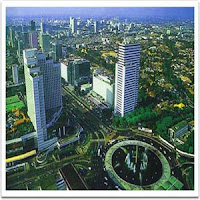
The capital city of Indonesia is Jakarta, a city with impressive histories and backgrounds. At the beginning, Jakarta was known as a seaport named Sunda Kelapa. The anniversary of Jakarta on 22nd June 1527 was stipulated based on the conquest history of Demak soldiers under the commander Sultan Fatahillah to subjugate the territory from Portuguese. The name of Jayakarta donated by Fatahillah for the conquered territory means “city with big triumph”. But the name of this city was changed from Jayakarta to become Batavia during the Dutch colonial.

As the capital city of the nation, Jakarta also plays role as governmental center, business and industrial hub. The city with 660 kilometer width is occupied by about 8 million populations and now Jakarta is growing as a metropolitan city that reflects the advancement of the nation economic, politic, social and industry.


History of Indonesia

Fossil of “Java Human” or Pithecanthropus Erectus was found in Trinil village, East Java by Dr. Eugene Dubois in 1809 giving rise to assumption that Indonesian land had been occupied since 500,000 thousand years ago.As recorded in the history that extensive migration to the Indonesian islands was known to have occurred in 3.000-5.000 before Gregorian Calendar by Mongoloid tribe from China and Tonkin. This nation brought in new stone culture, bronze, iron and Austronesian language. The arrival of traders mainly from China and India also brought in Hindu and Buddha religion.

The legacy traces of both religions cover Hindu and Buddha temple heritages that were supposedly constructed during the kingdoms epoch. Borobudur temple constructed in Central Java, for instance, is one of the glorious evidence of Buddha and Sriwijaya Kingdom. Other temples like Prambanan, Penataran, and Dieng Plateau were the glorious evidence of Hindu religion in the history of Indonesia. And Islam entered into Indonesia since the arrival of merchants and traders.Second, Sunda Kecil (Small Sunda) Island comprising smaller islands ranging from Bali Island to the East territory. Third, Maluku Island covering all islands situated between Irian Jaya and Sulawesi territory. And the last is Irian Jaya, the island situated in the most eastern part of Indonesia.

After the arrival of Portuguese in 1509, Dutch also invaded to control Indonesia as a colonial region at the beginning of 17th century. Initially Dutch controlled the region via VOC, which was then directly controlled by Dutch government since the beginning of 19th century to the World War II era.By 1942, Japan was the only Asian nation colonizing Indonesia but surrendered in 1945 at the end of the World War II in Asia and also this was the opportunity for Indonesian to proclaim its independence on 17th August 1945.

Foreign Representatives of Visiting Indonesia

Foreign Representatives

Embassy Name : Embassy of the Democratic Republic of AfghanistanAddress : Jl. Dr. Kusumaatmaja SH No. 15, Menteng, Jakarta Pusat 10310Phone 62-21) 314-3169, Fax 62-21) 335-390

Embassy Name : Embassy of the Democratic People's Republic of AlgeriaAddress : Jl. H. R. Rasuna Said Kav. 10-11, Kuningan, Jakarta Selatan 12950Phone 62-21) 525-4719, 525-4809, Fax 62-21) 525-4654Contact Mail :ambalyak@rad.net.id

Embassy Name : Embassy of the Republic of ArgentinaAddress : Menara Mulia Building, 19th floor, Jl. Jend. Gatot Subroto Kav. 9-11 Jakarta Selatan 12930Phone 62-21) 526-5661, 526-5662, Fax 62-21) 526-5664Contact Mail :embargen@cbn.net.id

Embassy Name : Embassy of AustraliaAddress : Jl. H.R. Rasuna Said Kav. C15-16, Kuningan, Jakarta Selatan 12940Phone 62-21) 2550-5555, Fax 62-21) 522-7101, 526-1690Contact Mail public.affairsjakt@dfat.gov.au

Embassy Name : Embassy of AustriaAddress : Jl. Diponegoro No. 44, Menteng, Jakarta Pusat 10310Phone 62-21) 338-090, 338-101, Fax 62-21) 390-4927Contact Mail :auambjak@rad.net.id

Embassy Name : Embassy of the People's Republic of BangladeshAddress : Jl. Denpasar Raya No. 3 Blok A13 Kav. 10, Kuningan, Jakarta Selatan 12950Phone 62-21) 525-1986, 522-1574, Fax 62-21) 526-1807Contact Mail :bdootjak@rad.net.id

Embassy Name : Royal Belgian EmbassyAddress : Deutsche Bank Building, 16th floor, Jl. Imam Bonjol No. 80, Menteng, Jakarta Pusat 10310Phone 62-21) 316-2030, Fax 62-21) 316-2035Contact Mail :jakarta@diplobel.org,
ambeljkt@rad.net.idWebsite :http://www.austembjak.or.

Embassy Name : Embassy of the Federative Republic of BrazilAddress : Menara Mulia Building, 16th floor, Jl. Jend. Gatot Subroto Kav. 9-11, Phone 62-21) 526-5656, 526-5657, 526-5658, Fax 62-21) 526-5659Contact Mail :brasemb@rad.net.id

Embassy Name : Embassy of Brunei DarussalamAddress : Wisma GKBI, Suite 1901, Jl. Jend. Sudirman Kav. 28, Jakarta Pusat 10210Phone 62-21) 574-1437-1469, 574-1470-1472, Fax 62-21) 574-1463

Embassy Name : Embassy of the People's Republic of BulgariaAddress : Jl. Imam Bonjol No. 34-36, Menteng, Jakarta Pusat 10310Phone 62-21) 390-4048, 390-4049, Fax 62-21) 315-1433

Embassy Name : Royal Embassy of CambodiaAddress : Jl. Kintamani Raya C-15 No. 33, Jakarta 12950Phone 62-21) 919-2895, Fax 62-21) 520-2673Contact Mail :recjkt@cabi.net.id

Embassy Name : Embassy of CanadaAddress : World Trade Centre, 6th Floor, Jl. Jend. Sudirman, Kav. 29, Jakarta 12920Phone 62-21) 525-0709, Fax 62-21) 571-2251Contact Mail :jkarta@dfait-maeci.gc.ca

Embassy Name : Embassy of the Republic of ChileAddress : Bina Mulia Building I, 7th floor, Jl. H.R. Rasuna Said Kav. 10, Kuningan, Phone 62-21) 520-1131, 520-1132, Fax 62-21) 520-1955Contact Mail :emchijak@rad.net.id, echij@rad.net.id

Embassy Name : Embassy of the People's Republic of ChinaAddress : Jl. Mega Kuningan 2, Karet Kuningan, Jakarta Selatan 12950Phone 62-21) 576-1039, Fax 62-21) 576-1034

Embassy Name : Embassy of the Republic of ColombiaAddress : Plaza Sentral, 16th floor, Jl. Jend. Sudirman Kav. 47, Jakarta Selatan 12920Phone 62-21) 525-6446, 570-1422, Fax 62-21) 520-7717Contact Mail :emcolin@rad.net.idWebsite :http://www.dfait-maeci.gc

Embassy Name : Embassy of CubaAddress : Taman Puri, Jl. Opal Blok K-1, Permata Hijau, Jakarta 12210Phone 62-21) 530-4293, Fax 62-21) 5367-6906Contact Mail :cubaindo@cbn.net.idWebsite :http://www.chinaembassy-i

Embassy Name : Royal Danish EmbassyAddress : Menara Rajawali, 25th Floor, Jl. Mega Kuningan Lot #5.1, Jakarta 12950, Phone 62-21) 576-1478, Fax 62-21) 576-1535Contact Mail :dkemb9@cbn.net.idWebsite :http://www.croatemb.or.id

Embassy Name : Representation of the European CommissionAddress : Wisma Dharmala Sakti, 16th floor, Jl. Jend. Sudirman Kav. 32, Jakarta Pusat 10220, (PO Box 6454, JKPDS Jakarta)Phone 62-21) 570-6076, Fax 62-21) 570-6075Contact Mail :delegation-indonesia@cec.eu.intWebsite :http://www.czech-embassy.

Embassy Name : Embassy of FranceAddress : Jl. M.H. Thamrin No. 20, Menteng, Jakarta Pusat 10310Phone 62-21) 314-2807, 314-3338, Fax 62-21) 392-9678Contact Mail :ambfrykt@uninet.net.id

Embassy Name : Embassy of the Federative Republic of GermanyAddress : Jl. M.H. Thamrin No. 1, Menteng, Jakarta Pusat 10310Phone 62-21) 390-1750, Fax 62-21) 390-1757Contact Mail :germany@rad.net.idWebsite :http://www.delidn.cec.eu.

Embassy Name : Embassy of the Republic of HungaryAddress : Jl. H.R. Rasuna Said Kav. X-3, Kuningan, Jakarta Selatan 12950Phone 62-21) 520-3459, 520-3460, Fax 62-21) 520-3461Contact Mail :huembjkt@rad.net.id

Embassy Name : Embassy of IndiaAddress : Jl. H.R. Rasuna Said Kav. S-1, Kuningan, Jakarta Selatan 12950Phone 62-21) 520-4150, 520-4152, 520-4157, Fax 62-21) 520-4160Contact Mail :eoiisi@indo.net.idWebsite :http://www.germanembjak.o

Embassy Name : Embassy of the Republic of IraqAddress : Jl. Teuku Umar No. 38, Menteng, Jakarta Pusat 10350Phone 62-21) 390-4067, 390-4068, 390-4069, Fax 62-21) 390-4066Contact Mail :iraqembi@rad.net.id

Embassy Name : Embassy of the Republic of ItalyAddress : Jl. Diponegoro No. 45, Menteng, Jakarta Pusat 10310Phone 62-21) 337-445, Fax 62-21) 337-422Contact Mail :italemba@rad.net.id, italemea@rad.net.idWebsite :http://www.eoijakarta.or.

Embassy Name : Embassy of JapanAddress : Menara Thamrin, 7-10th floors, Jl. M.H. Thamrin Kav. 3, Menteng, Jakarta Pusat 10350Phone 62-21) 324-308, Fax 62-21) 325-460

Embassy Name : Embassy of the Hashemite Kingdom of JordanAddress : Jl. Denpasar Raya Blok A-13 Kav. 01-02, Kuningan, Jakarta Selatan 12950Phone 62-21) 520-4400, 520-4401, Fax 62-21) 520-2447Contact Mail :jordanem@cbn.net.idWebsite :http://www.italambjkt.or.

Embassy Name : Embassy of the Republic of KoreaAddress : Jl. Jend. Gatot Subroto Kav. 57-58, Kuningan, Jakarta Selatan 12930Phone 62-21) 520-1915, Fax 62-21) 525-4159Website :http://www.embjapan.or.id

Embassy Name : Embassy of the Lao People's Democratic RepublicAddress : Jl. Patra Kuningan XIV No. 1A, Kuningan, Jakarta Selatan 12950Phone 62-21) 522-9602, 522-7862, Fax 62-21) 522-9601Contact Mail :laoemjkt@cabi.net.id

Embassy Name : Embassy of LebanonAddress : Jl. YBR V No. 82, Kuningan, Jakarta 12950Phone 62-21) 525-3074, 526-4306, Fax 62-21) 520-7121

Embassy Name : Embassy of LibyaAddress : Jl. Pekalongan No. 24, Menteng, Jakarta Pusat 10310Phone 62-21) 335-308, 335-754, Fax 62-21) 335-726

Embassy Name : Embassy of MalaysiaAddress : Jl. H.R. Rasuna Said Kav. X-6 No. 1-3, Kuningan, Jakarta Selatan 12950Phone 62-21) 522-4947, Fax 62-21) 522-4974Contact Mail :mwjkarta@indosat.net.id, kbmjkt@indosat.net.id

Embassy Name : Embassy of MaliAddress : Jl. Mendawai III No. 18, Kebayoran Baru, Jakarta 12130Phone 62-21) 720-8504, 726-8504, Fax 62-21) 722-9589Contact Mail :ambamali@indosat.net.id

Embassy Name : Embassy of the Republic of Marshall IslandsAddress : Jl. Brawijaya Raya No. 17, Jakarta 12160Phone 62-21) 724-8564, 724-8565, Fax 62-21) 724-8566Contact Mail :marshall@idola.net.id

Embassy Name : Embassy of MexicoAddress : Menara Mulia Building, Suite 2360, Jl. Jend. Gatot Subroto Kav. 9-11, Jakarta Selatan 12930Phone 62-21) 520-3980, Fax 62-21) 520-3978Contact Mail :embmexic@rad.net.id

Embassy Name : Embassy of the Kingdom of MoroccoAddress : Kuningan Plaza South Tower, Suite 512, Jl. H.R. Rasuna Said Kav. C11-14, Kuningan, Jakarta Selatan 12940Phone 62-21) 520-0773, 520-0956, Fax 62-21) 520-0586Contact Mail :sifamajakar@cbn.net.id

Embassy Name : Embassy of MozambiqueAddress : Wisma GKBI, 37th floor, Jl. Jend. Sudirman No. 28, Jakarta 10210Phone 62-21) 574-0901, Fax 62-21) 574-0907Contact Mail :embamoc@cbn.net.id

Embassy Name : Embassy of the Union of MyanmarAddress : Jl. H. Agus Salim No. 109, Menteng, Jakarta Pusat 10350Phone 62-21) 314-0440, 327-684, Fax 62-21) 327-204Contact Mail :myanmar@cbn.net.id

Embassy Name : Royal Netherlands EmbassyAddress : Jl. H.R. Rasuna Said Kav. S-3, Kuningan, Jakarta Selatan 12950, (P.O.Box 2439 JKT 10024)Phone 62-21) 525-1515, Fax 62-21) 570-0734Contact Mail :nlgovjak@attglobal.net

Embassy Name : New Zealand EmbassyAddress : Gedung BRI II, 23rd floor, Jl. Jend. Sudirman Kav. 44-46, Jakarta Pusat 10210Phone 62-21) 570-9460, Fax 62-21) 570-9457Contact Mail :nzembjak@cbn.net.id

Embassy Name : Embassy of the Federal Republic of NigeriaAddress : Jl. Taman Patra XIV No. 11A, Kuningan Timur, Jakarta Selatan 12950Phone 62-21) 526-0922, 526-0923, Fax 62-21) 526-0924Contact Mail :embnig@centrin.net.id

Embassy Name : Embassy of the Kingdom of NorwayAddress : Menara Rajawali Building, 25th floor, Kawasan Mega Kuningan Lot 5.1, Jakarta Selatan 12950Phone 62-21) 576-1523, 576-1524, Fax 62-21) 576-1537Contact Mail :emb.jakarta@mfa.no
Website :http://www.netherlandsembEmbassy Name : Embassy of PalestineAddress : Jl. Diponegoro No. 59, Menteng, Jakarta Pusat 10310Phone 62-21) 314-5444, 323-521, 310-6546, 323-521, Fax 62-21) 310-8011

Embassy Name : Embassy of PanamaAddress : World Trade Center, 13th floor, Jl. Jend. Sudirman Kav. 29-31, Jakarta 12920Phone 62-21) 571-1867, 570-0218, 521-1821, Fax 62-21) 571-1933Website :http://www.norwayemb-indo

Embassy Name : Embassy of PeruAddress : Bina Mulia Building II, 3rd Floor, Jl. H.R. Rasuna Said Kav. 11, Kuningan, Jakarta Selatan 12950Phone 62-21) 520-1866, 520-1176, Fax 62-21) 520-1932Contact Mail :embaperu@indo.net.id or embaperu@cbn.net.id

Embassy Name : Embassy of the Republic of the PhilippinesAddress : Jl. Imam Bonjol No. 6-8, Menteng, Jakarta Pusat 10310Phone 62-21) 315-5118, 3109-2789, Fax 62-21) 315-1167, 314-9773Contact Mail phjkt@indo.net.id

Embassy Name : Embassy of the Republic of PolandAddress : Jl. H.R. Rasuna Said Kav. X Blok IV3, Kuningan, Jakarta 12950Phone 62-21) 252-5938/9, 252-5940/42, Fax 62-21) 252-5958Contact Mail plembjkt@rad.net.id

Embassy Name : Embassy of PortugalAddress : Bina Mulia Bldg I, 7th floor, Jl. H.R. Rasuna Said Kav. X, Kuningan, Jakarta 12950Phone 62-21) 526-5103, 526-5105, 526-5106, Fax 62-21) 527-1981Contact Mail porembjak@attglobal.net

Embassy Name : Embassy of the State of QatarAddress : Jl. Taman Ubud I No. 5, Kuningan Timur, Jakarta 12920Phone 62-21) 527-7751, 527-7752, Fax 62-21) 527-7754Contact Mail :qataremj@rad.net.id

Embassy Name : Embassy of RomaniaAddress : Jl. Teuku Cik Ditiro No. 42A, Menteng, Jakarta Pusat 10310Phone 62-21) 310-6240, 310-6241, Fax 62-21) 390-7759Contact Mail :ambromin@indosat.net.id

Embassy Name : Embassy of the Russian FederationAddress : Jl. H. R. Rasuna Said Kav. 7 No. 1-2, Kuningan, Jakarta Selatan 12950Phone 62-21) 522-2912, 522-2914, Fax 62-21) 522-2916, 522-2915Contact Mail :rusembjkt@dnet.net.id

Embassy Name : Embassy of the Kingdom of Saudi ArabiaAddress : Jl. M.T. Haryono Kav. 27, Cawang Atas, Jakarta Timur 13630Phone 62-21) 801-1533, 801-1536, 801-1537, Fax 62-21) 801-1527

Embassy Name : Embassy of the Republic of SingaporeAddress : Jl. H.R. Rasuna Said Kav. X-4 No. 2, Kuningan, Jakarta Selatan 12950Phone 62-21) 5296-1433, 520-1489, Fax 62-21) 520-2320Contact Mail :denpasar@pacific.net.id

Embassy Name : Embassy of the Slovak RepublicAddress : Jl. Prof. Moh. Yamin SH No. 29, Menteng, Jakarta Pusat 10310Phone 62-21) 310-1068, 315-1429, Fax 62-21) 310-1180Contact Mail :slovemby@indo.net.id

Embassy Name : Embassy of South AfricaAddress : Wisma GKBI, Suite 705, Jl. Jend. Sudirman Kav. 28, Jakarta Pusat 10210Phone 62-21) 574-0660, Fax 62-21) 574-0661Contact Mail :saembjak@centrin.net.id

Embassy Name : Embassy of the Kingdom of SpainAddress : Jl. H. Agus Salim No. 61, Menteng, Jakarta Pusat 10350Phone 62-21) 335-0771, 335-940, Fax 62-21) 325-996Website :http://www4.gov.sg/mfa/jk

Embassy Name : Embassy of the Republic of the SudanAddress : Wisma Bank Dharmala, 7th floor, Suite 1, Jl. Jend. Sudirman Kav. 28, Jakarta Selatan 12910Phone 62-21) 521-2075, Fax 62-21) 521-2077Contact Mail :sudanjak@indosat.net.idWebsite :http://www.saembassy-jaka

Embassy Name : Embassy of SwitzerlandAddress : Jl. H.R. Rasuna Said Kav. X3-2, Kuningan, Jakarta Selatan 12950Phone 62-21) 525-6061, Fax 62-21) 520-2289Contact Mail :swiemjak@rad.net.id, vertretung@jak.rep.admin.ch

Embassy Name : Embassy of the Syrian Arab RepublicAddress : Jl. Karang Asem I No. 8, Kuningan Raya, Jakarta Selatan 12950Phone 62-21) 525-5991, 520-4117, 520-1641, Fax 62-21) 520-2511

Entry Point of Visiting Indonesia

Entry Point

Any one coming to Indonesia shall have at least 6-moth valid passport as of the arrival date and have permit document to pass. No Visa is needed for tourists from Argentina, Australia, Austria, Belgium, Brazil, Brunei, Canada, Chile, Denmark, Egypt, Finland, French, Greek, Germany, Iceland, Ireland, Italia, Japan, Kuwait, Liechtenstein, Luxemburg, Malaysia, Malta, Morocco, Mexico, Netherlands, New Zealand, Norway, Philippine, Singapore, South Korea, Spain, Sweden, Switzerland, Saudi Arabia, Taiwan, Thailand, Turkey, England, America and Venezuela.

Free entry visa is also provided to delegates registered in a conference that is officially held. In addition, tourist visa can be obtained from every Indonesian Embassy or Consulate. Come in and out of Indonesia must pass number of specific gates, namely by air via Jakarta, Bali, Medan, Manado, Biak, Ambon, Surabaya and Batam; by sea via Semarang, Jakarta, Bali, Pontianak, Balikpapan, Tanjung Pinang and Kupang. The length of stay in Indonesia is permitted for maximum two months.

Customs Office regulation in Indonesia allows to bring in 2 liter alcoholic drinks, 200 cigarettes or 50 cigars or 100 gram tobaccos and sufficient amount of perfume for adults. Number of items that needs special permit to be brought in Indonesia is car, photography instrument, and other electronic devices. All films and videos must be censored by Indonesian Film Sensor Agency. Then fresh fruits, plants, and animals should also have quarantine permit. In general, narcotics and weapons are illegal items to be brought in Indonesia.

Regional Description of Indonesia


Regional Description:

Nanggroe Aceh Darussalam
North Sumatra
Riau
Riau Archipelago
South Sumatra
Jambi
Bangka Belitung
Bengkulu
Lampung
Banten
DKI Jakarta
West Java
Central Java
DI Yogyakarta
East Java
Bali
West Nusa Tenggara
East Nusa Tenggara
West Kalimantan
Central Kalimantan
East Kalimantan
South Kalimantan
North Sulawesi
Gorontalo
Central Sulawesi
South Sulawesi
West Sulawesi
South East Sulawesi
North Maluku
Maluku
Papua
West Papua
West Sumatra

Indonesian Phrases

Indonesian Phrases

English == Indonesia

How do you do? == Apakabar?

Good morning == Selamat pagi

Good afternoon == Selamat siang

Goodbye == Selamat tinggal

Bon voyage == Selamat jalan

Fine == Baik

Welcome == Selamat datang

Personal Pronoun & Title

I == Saya

You == Kamu/Anda

We == Kami

He/ She == Ia/Dia

They == Mereka

Mr. == Tuan

Miss == Nona

Mrs == Nyonya

Questions

Can you help me? == Dapatkah Anda membantu/menolong saya?

How do I get there? == Bagaimana caranya untuk ke sana?

How far? == Seberapa jauh?

How long will it make? == Seberapa lama?

How much (price)? == Berapa harganya?

What is this/that? == Apa ini/ itu?

What is your name? == Siapa nama Anda?

When? == Kapan?

Where? == Di mana?

Why? == Kenapa/ mengapa?

Direction

Go up == Naik

Go down == Turun

Turn == Berputar

Right == Kanan

Left == Kiri

Front == Depan

Behind == Belakang

North == Utara

South == Selatan

East == Timur

West == Barat

Information of Indonesia

Language

There are 583 languages and dialects spoken by the people of Indonesia and
divided into number of ethnic groups.

Number of specific local dialects amongst other thing is Aceh, Batak, Sunda, Java,
Sasak, Timor, Dayak, Minahasa, Toraja, Bugis, Halmahera, Ambon, Seram, and Irian language.

The national language of Indonesian is Indonesian language that is mostly
similar to Malay language.

Currency

Currency unit of Indonesian Rupiah is also called as IDR.

Information on daily exchange rate can be found in newspapers.

Rupiah currency and Dollar are the most acceptable currencies.

Most of tourism resorts have money changer facilities, but when traveling to remote areas; it is highly recommended to change money and clear check.

Credit cards are only acceptable in big hotels, restaurants and traveling agent.

Climate

Climate in Indonesia is categorized into tropical climate.

The seasons consist of rainy and dry season along the year.

East season wind blows on June to September and brings about dry climate.

In the meantime west season wind occurs on December to March bringing about rainy season.

The change of two seasons intervened with hard rain.

The hardest rain usually occurs on December and January with general humidity is 75% and 100%.

Time Zones

Time in Indonesia is GMT plus seven hours or sixteen hours ahead of the US Pacific time standard.

Indonesia time is divided into three time zones:

namely, western Indonesian time covering Sumatera Island, Java, and Madura, West Kalimantan
and Central Kalimantan is GMT time plus seven hours;

Central Indonesia Time covers East and South Kalimantan, Sulawesi, Bali, and
Nusa Tenggara is GMT time plus eight hours.

Last in Eastern Indonesia Time covers Maluku and Irian Jaya, is GMT time plus nine hours.

Electricity

Electric power supply is usually about 220 volts/ 250 circle in big cities,
but 110 volt is still used in number of regions.

In general, rounded-end stacker with two pins is usually used.

People

Referring to estimation on July 2008, total population of Indonesia
is 237,512,352 people.

In Indonesia, there are hundreds ethnic groups, either small groups or large groups regarding to its members.

Largest ethnic groups in Indonesia are such as Javanese, Sundanese, Madurese, Malay, Balinese,
Minang, Batak, Dayak, Bugis, and Chinese.

Because of its multiethnic factors, physically, Indonesian people become
vary depending on its ethnic groups.

Flora & Fauna

A British scientist named A. R. Wallace created an imaginary line,
which was then named as Wallace line dividing Asia and Australia fauna.

This line overtakes Malay Island, between Kalimantan and Sulawesi;
and between Bali (in the west) and Lombok (in the east).

Theory that the Wallace presented explains the existence of fauna
species in Indonesia is similar with those in Asia and Australia.

However, Indonesia also has its original fauna
like Orang Utan in Sumatera and Kalimantan,
giant lizard or Komodo at Komodo Island, rhinos in Java,
Wild ox, Tiger, and other protected species.

Dos and Don’ts


When visiting Indonesia, visitors should observe local traditions and attitudes.

Number of traditions and attitudes is:
Though shake hand is generally accepted in social intercourse between man and woman,
but number of Moslem women introduces themselves to men by nodding their head and smiling.

Greeting traditionally is shake hand by two hands,
but without holding in grasp.

Make a phone call before a visit is polite maters.

Shoes must be taken off before entering house
or house of worship.

In general, drink is offered to guest when visiting,
receiving the drink is polite matters.

Right hand is always used when eating, receiving something, or giving something.

Right index finger should not be used to appoint a place, goods or person.

Use the right hand thumb with four other fingers folded back.

Taking photographs at house of worships is allowed,
but permit to do so should be obtained first.

Toast is not generally accepted.

Most of Indonesian Moslems does not
consume alcoholic drinks.

Banking Hours

Normally, bank office hour is from 8 am to 3.00 pm from Monday to Friday.

But, number of banks opens their branches in hotel for longer office hour.

Jakarta has several international banks, but money can be exchanged in hotel cashier and at official money changers.

Office Hours

Office hour is started from 8 am to 4 pm, or at 9 am to 5 pm, with resting time for lunch between 12 noon to 1 pm.

Office is usually closed on Saturday.

Government office hour is from 8 am to 4 pm and from Monday to Friday, Saturday is holiday.